
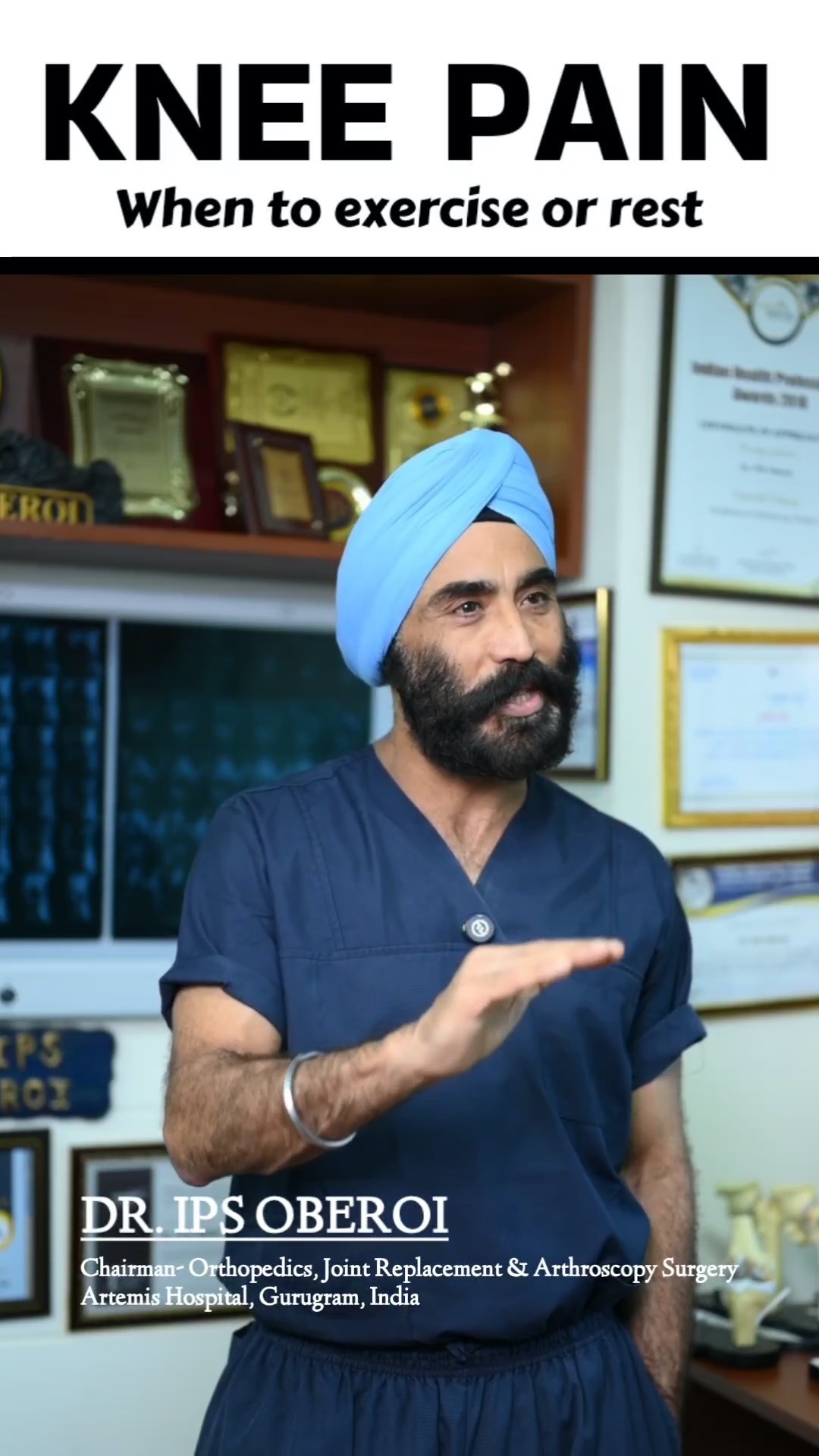
In a recent health awareness video gaining attention online, renowned orthopedic surgeon Dr. IPS Oberoi has shared expert guidance on one of the most common yet misunderstood concerns — managing knee pain correctly.
Dr. Oberoi, Chairman of Orthopedics, Robotic Joint Replacement, Sports Injury and Arthroscopy at Artemis Hospital Gurugram, explains that the biggest mistake many patients make is either excessive rest or inappropriate exercise during episodes of knee pain.
With knee problems rising due to arthritis, sports injuries, sedentary lifestyles, and age-related joint degeneration, experts emphasize that the right balance between activity and rest is crucial for joint recovery and long-term mobility.
In the YouTube Shorts awareness video https://www.youtube.com/shorts/TWkcdhN9TAY Dr. Oberoi highlights that complete bed rest is not always advisable. Instead, controlled movement, guided exercise, and timely rest based on the cause and severity of knee pain can help reduce inflammation and prevent further joint damage.
Key Expert Insights from the Video:
1. When mild knee pain benefits from safe movement
2. When proper rest is medically necessary
3. Common mistakes that worsen knee conditions
4. Importance of early orthopedic consultation
According to orthopedic specialists, ignoring persistent knee pain or following generic exercise advice without medical evaluation can accelerate joint wear and lead to chronic issues such as arthritis or ligament complications.
The awareness message is particularly relevant for middle-aged adults, elderly individuals, fitness enthusiasts, and arthritis patients who often struggle to decide whether to stay active or rest during knee discomfort.
Healthcare experts stress that evidence-based guidance, personalized rehabilitation, and avoiding self-medication are essential steps in protecting knee joints and maintaining long-term musculoskeletal health.
This educational short video aims to promote informed decision-making and encourage patients to adopt medically appropriate activity levels for safer recovery and better joint health outcomes.



Share This News